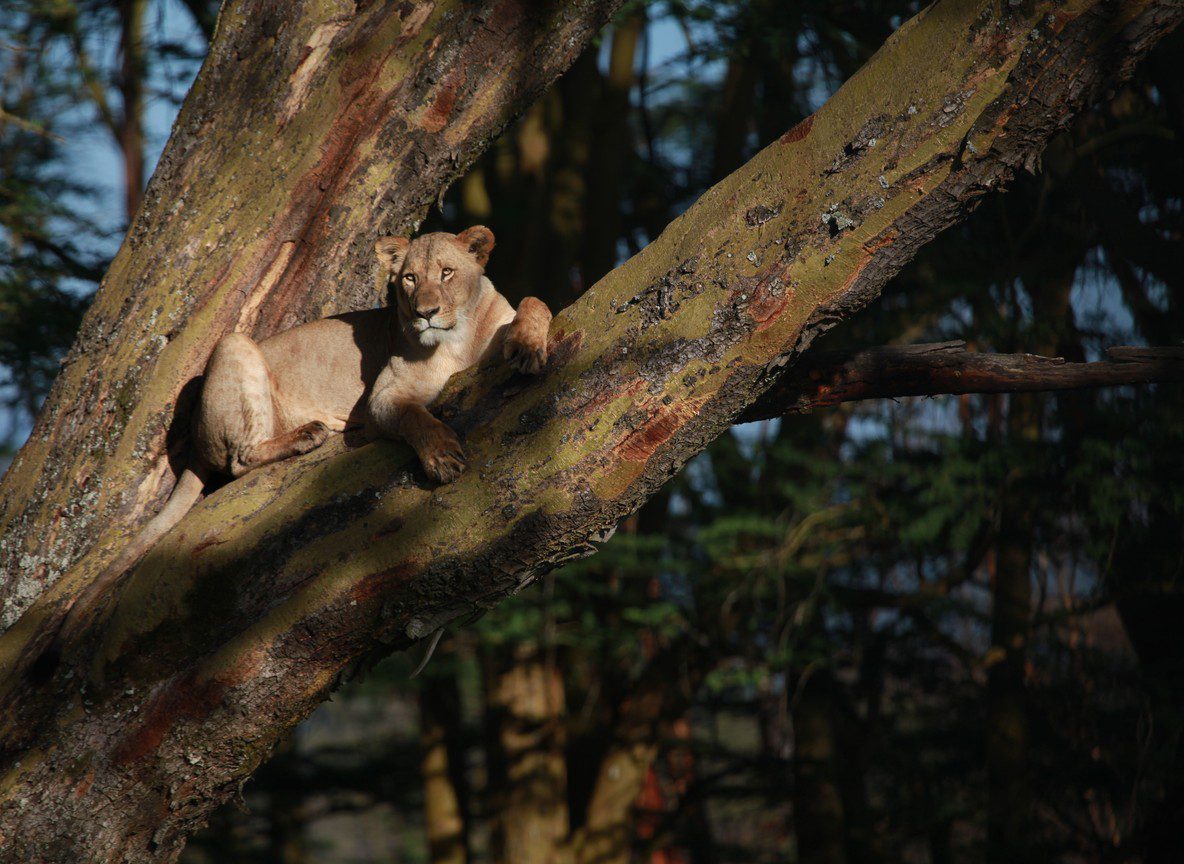
Wildlife researchers working in the greater Mara ecosystem have consistently documented one finding about Olare Motorogi Conservancy: it holds the highest lion density of any zone within the wider Masai Mara landscape. In an ecosystem already famous for its big cat populations, that distinction carries weight.
Olare Motorogi Conservancy covers approximately 35,000 acres on the northeastern edge of the Masai Mara National Reserve. It shares unfenced boundaries with the reserve to the south and Naboisho Conservancy to the north, which means its wildlife moves freely across a continuous corridor. What it does not share with the national reserve is the vehicle pressure. As a private conservancy with access restricted to guests of the camps operating within it, OMC is where experienced wildlife observers go when they want genuine encounters rather than a shared audience.
Why Olare Motorogi Has Such High Lion Density
The explanation starts with habitat and ends with human behaviour. The conservancy combines open grassland, riverine forest, and rocky outcrops in a configuration that supports multiple overlapping pride territories. The Ntiakatiak River bisects the conservancy, creating a corridor of thick vegetation that prides use for denning, shade, and ambush hunting.
More significantly, the low vehicle and human density in OMC means lion prides have not been pushed into modified behaviour. In heavily visited sections of the national reserve, lions exhibit measurable behavioural shifts around vehicles: hunting patterns change, den site selection moves away from open ground, and rest periods shift to avoid peak game drive hours. These are documented changes, not speculation.
Lions in Olare Motorogi rest in open grassland because nothing discourages them from it. Hunts play out across exposed ground. Cubs use open areas where they would be vulnerable to vehicle pressure in the reserve. The quality of observation this produces is something that the reserve’s most popular big cat zones cannot consistently replicate.
Several well-documented prides are resident within the conservancy. The Marsh Pride, which became familiar to international audiences through the BBC’s Big Cat Diary series, ranges between the reserve and OMC. The Olare Pride and the Fig Tree Pride maintain territories within the conservancy boundaries, and both have been studied at the individual level for years.
What Private Access Means in Practice
The conservancy model restricts game drive vehicles to guests of the camps operating within OMC. This is the structural difference that produces every other advantage.
| Feature | Masai Mara National Reserve | Olare Motorogi Conservancy |
|---|---|---|
| Vehicle access | Open public access | Camp guests only |
| Off-road driving | Not permitted | Permitted where vegetation allows |
| Night game drives | Not permitted | Standard activity |
| Walking safaris | Not permitted | Permitted with armed guide |
| Vehicles at a sighting | No limit, 10 to 25 is common | 3 to 4 maximum per camp agreement |
Walking safaris in OMC are a genuine bushwalk, not a guided stroll. With an armed ranger, you cover terrain on foot and read the environment at ground level: track identification, dung analysis, bird alarm calls, wind direction and what it tells you about what is nearby. The relationship with the landscape from a walking safari is categorically different from anything a vehicle delivers.
Night drives change the lion narrative in a specific way. Lions are crepuscular and nocturnal hunters. The hunts visitors in the reserve never see happen after dark. In OMC, your guide drives the conservancy with a handheld spotlight after sunset, and the same prides that spent the afternoon napping in the shade come alive as the temperature drops.
Camps in Olare Motorogi
OMC operates on an exclusivity agreement that limits total guest numbers within the conservancy at any time. The camps are small by design.
Porini Lion Camp is the property most closely associated with OMC’s lion observation programme. Gamewatchers Safaris operates it with a conservation commitment to the Maasai landowners built into the camp’s founding structure. A maximum of ten tents, positioned to maximise proximity to the Marsh Pride’s core territory. This is the starting point for most travellers visiting OMC with lions as their primary interest.
Olare Mara Kempinski combines the conservation access of the OMC model with a higher finish level: spa, pool, and superior tented rooms. This camp suits travellers who want the exclusivity and night drive access without compromising on comfort standards.
Mara Plains Camp, an andBeyond property, is known for its photographic approach to guiding and its access to both reserve terrain and OMC privileges. A useful option for travellers who want to cover more ground.
Camp selection in OMC matters because each property covers a specific section of the 35,000 acres. Your guide team’s knowledge is built around their section. The camp you choose determines which lion prides you are likely to see most often, which river crossings are within range, and which terrain types form the core of your game drives.
The Migration Through Olare Motorogi
The wildebeest migration corridor passes through OMC during the July to September peak. The conservancy’s position on the northeastern edge of the reserve means that wildebeest columns entering Kenya from the Serengeti’s northern sections move across OMC terrain before reaching the Mara River proper.
The Ntiakatiak River provides secondary crossing points during periods of high migration flow. When the main Mara River crossings become congested with vehicles, OMC guests can access crossings within the conservancy that see a fraction of the observer traffic. This is one of the clearest practical illustrations of what private conservancy access actually delivers during peak season.
The combination of crossing access and lion activity during August in OMC is notable. Wildebeest draw lions from across the ecosystem, and documented kill frequencies during August within the conservancy are among the highest recorded in any section of the Mara.
Lion Research in OMC
Olare Motorogi’s status as a high-density lion zone has made it a significant research site over time. The Mara-Meru Cheetah Project, the Zoological Society of London’s Maasai Mara Lion Project, and several academic research programmes have conducted ongoing studies within the conservancy.
Long-term individual identification of lions means that camp guides work with named individuals and know their family trees, coalition histories, and territorial patterns. When a guide says “that is Rani, she has two nine-month-old cubs and her coalition male was last at the river yesterday,” that is not a narrative performance. It is the accumulated output of years of individual-level observation by guides who have worked the same territory across multiple lion generations.
For wildlife enthusiasts with a serious interest in carnivore ecology, OMC offers a combination that is rare anywhere in Africa: dense populations, habituated behaviour, night drive access, walking safaris, and guides with specific rather than general knowledge.
When to Visit Olare Motorogi
| Month | Conditions | Best For |
|---|---|---|
| July to September | Migration peak | Crossing access, maximum lion activity |
| October to December | Post-migration, short rains | Resident big cats, lower prices |
| January to March | Dry shoulder | Excellent predator sightings, fewer visitors |
| June | Pre-migration | Good resident wildlife, pre-peak rates |
The conservancy performs well in every season. Outside migration months, the absence of seasonal visitor pressure and the resident lion prides make OMC a strong choice regardless of when you go.
Fees and Practical Planning
Conservancy fees: Olare Motorogi charges a daily conservancy fee on top of camp rates. As of 2026, this sits at approximately USD 120 to 150 per person per day, paid through the camp. The fee funds the Maasai landowner lease programme, the ranger patrol unit, and the conservancy management infrastructure that produces the low-vehicle experience.
Camp rates: OMC camps operate at the upper end of Kenya’s safari accommodation pricing. Full-board rates at Porini Lion Camp and Olare Mara Kempinski range from USD 400 to 900 per person per night depending on season and room type. This includes all game drives, conservancy fees, and most beverages.
Booking timeline: July, August, and December require six to twelve months advance planning for first-choice camp availability. The conservancy’s popularity among repeat Kenya visitors and conservation-focused travellers means peak season slots are genuinely constrained.
Getting there: Olare Motorogi is accessed via the Ol Kiombo or Keekorok airstrips, both served by Safarilink and Air Kenya from Wilson Airport in Nairobi. The drive from the airstrip into the conservancy is itself a game drive: the transition from tarmac to dirt road to conservancy is gradual, and wildlife sightings on the approach are common.
What to pack for night drives: The Mara at night in the cooler dry season can drop to 10 to 12 degrees Celsius in an open vehicle at speed. A warm fleece or mid-layer that fits under a light windproof jacket is the right approach. The guide supplies the spotlight; the camera settings you will need to sort out in advance (high ISO, manual focus, image stabilisation on).
How Olare Motorogi Fits Into a Kenya Safari
OMC works well as a standalone Mara experience, particularly for travellers who prioritise big cats over the breadth of the migration spectacle. It also pairs naturally with other parts of a Kenya circuit. A common approach is to combine an OMC stay with the national reserve for broader terrain coverage, or with Mara North Conservancy for a full conservancy-based Mara itinerary.
For travellers focused specifically on the migration crossings at the river, the Mara River crossing guide covers the full picture of positioning and timing, including the secondary crossing points accessible from conservancy camps like OMC.
For travellers considering the aerial perspective on the Mara, the hot air balloon safari guide explains what the balloon experience offers across the conservancy and reserve sectors, including Kili Balloon Safaris’ routes over the OMC area.
The Bottom Line on Olare Motorogi
If your primary interest in a Kenya safari is predator behaviour, particularly lions in their natural patterns without the behavioural modifications that come from high vehicle pressure, OMC is the strongest single option in the Mara ecosystem. The combination of documented lion density, night drive access, walking safaris, and guide teams with individual-level knowledge built over years makes it specific in a way that the national reserve, for all its magnificence, cannot replicate.
The cost is at the upper end. The experience matches it.
Have questions about this itinerary or destination? Get answers from a safari specialist before you commit.
Inquire More